
Meet Mark Ehrman
Helping people better understand their dogs through practical, evidence-based behaviour training.
I'm often asked what makes my approach different.
The answer is surprisingly simple.
I don't begin by asking "How do we stop this behaviour?"
I begin by asking "Why does this behaviour make sense to the dog?"
Understanding behaviour first leads to better decisions, better training, and better long-term outcomes—for both dogs and their owners.
That philosophy has shaped everything I do, from Puppy School through to complex aggression cases..
Dog training advice is everywhere—and much of it contradicts itself.
It’s easy to feel unsure what to follow, especially when things aren’t improving.
This is where a clearer, more structured approach makes a difference.
My Story
I didn't set out to become a dog trainer.
After almost twenty years working as an engineer, one dog with behavioural challenges changed the direction of my life. I became fascinated by why dogs behave the way they do, and how modern behavioural science could explain problems that many people simply labelled as "stubbornness" or "dominance."
That curiosity eventually became a profession.
Today, I help families better understand their dogs through practical, evidence-based training. I continue to study because our understanding of behaviour is always evolving.
Meet Mark
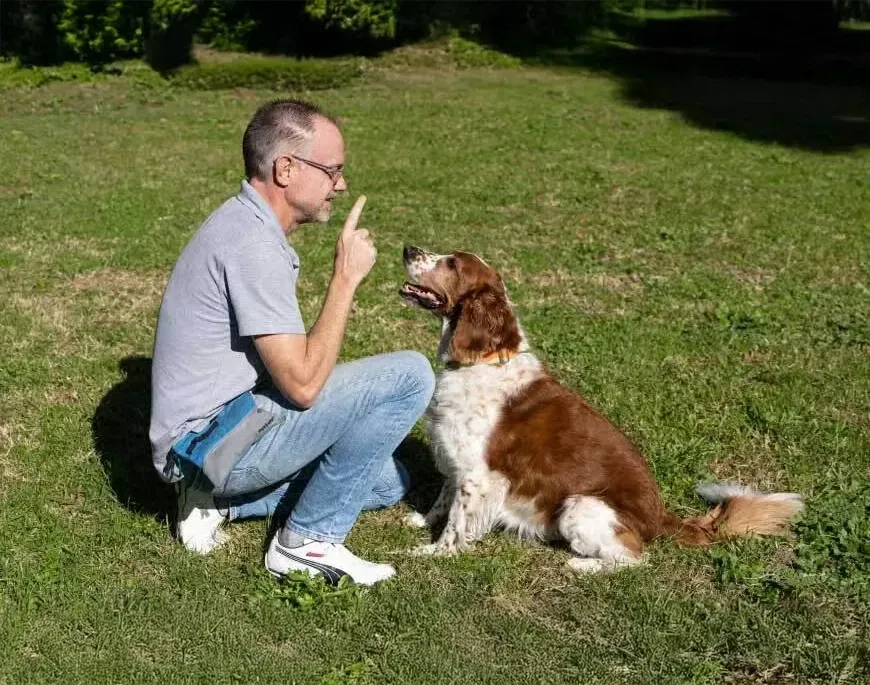
Mark has been working with dogs professionally since 2012, with his first certification in 2007.
His background is not just in training, but in problem-solving—bringing a structured, analytical approach to behaviour.
Rather than applying a standard method, he looks at:
What the dog is experiencing
What the behaviour is achieving
What needs to change for progress to happen
This allows him to quickly identify what’s actually going on—and avoid unnecessary steps or guesswork.

My Philosophy
One phrase has guided my work for many years:
When we know better, we do better.
Most behaviour problems aren't about dogs being stubborn, dominant, or trying to "get away with something."
They're usually the result of learning history, emotions, environment, and dogs attempting to meet their needs in the best way they know how.
That's why I focus on understanding behaviour before trying to change it.
When owners understand what's driving behaviour, training becomes clearer, kinder, and far more effective.
Experience & Qualifications
I believe dog trainers should continue learning throughout their careers.
Behavioural science evolves, and so should we.
My professional roles and qualifications include:
President, Association of Pet Dog Trainers, Australia (APDT Australia)
Faculty Advisor, Victoria Stilwell Dog Training Academy
Certified Behaviour Adjustment Training Instructor (CBATI-KA)
Victoria Stilwell Positively Dog Trainer (VSPDT)
Certificate III in Dog Training & Behaviour
Regular and ongoing professional development and conferences in Australia and USA
I also lecture, mentor other trainers, and remain actively involved in professional education because sharing knowledge strengthens our entire industry.

President
APDT Australia

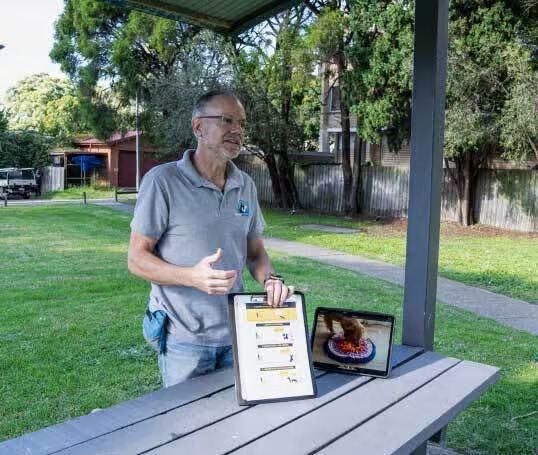
What It's Like to Work With Me
Dog training shouldn't leave you feeling judged or overwhelmed.
Whether we're working with a new puppy or a complex behaviour problem, my goal is always the same:
Help you understand what's happening
Explain the science in plain English
Give you practical strategies you can use immediately
Support both you and your dog without judgement
Every dog is different.
Every family is different.
That's why I don't believe in one-size-fits-all training.
Why Owners Choose
Canine Counselling
Owners often tell me they leave their first consultation feeling relieved.
Not because every problem has been solved in a single session, but because they finally understand what's been happening—and what to do next.
Whether you're raising a new puppy or working through a behaviour problem, I'd love to help you better understand your dog.
Private Training | Puppy School | Menacing & Dangerous Dog Matters
Service Areas: Sydney, Eastern Suburbs, Inner West, Lower North Shore
📞 Call 0448599663
📩 Email [email protected]
© 2026 | All rights reserved.
Website by Digiwoof